My 62-Year-Old Mom Wants to Fade Dark Spots for Under $150: The Derm-Approved Blueprint
From retinol to antioxidants and beyond.

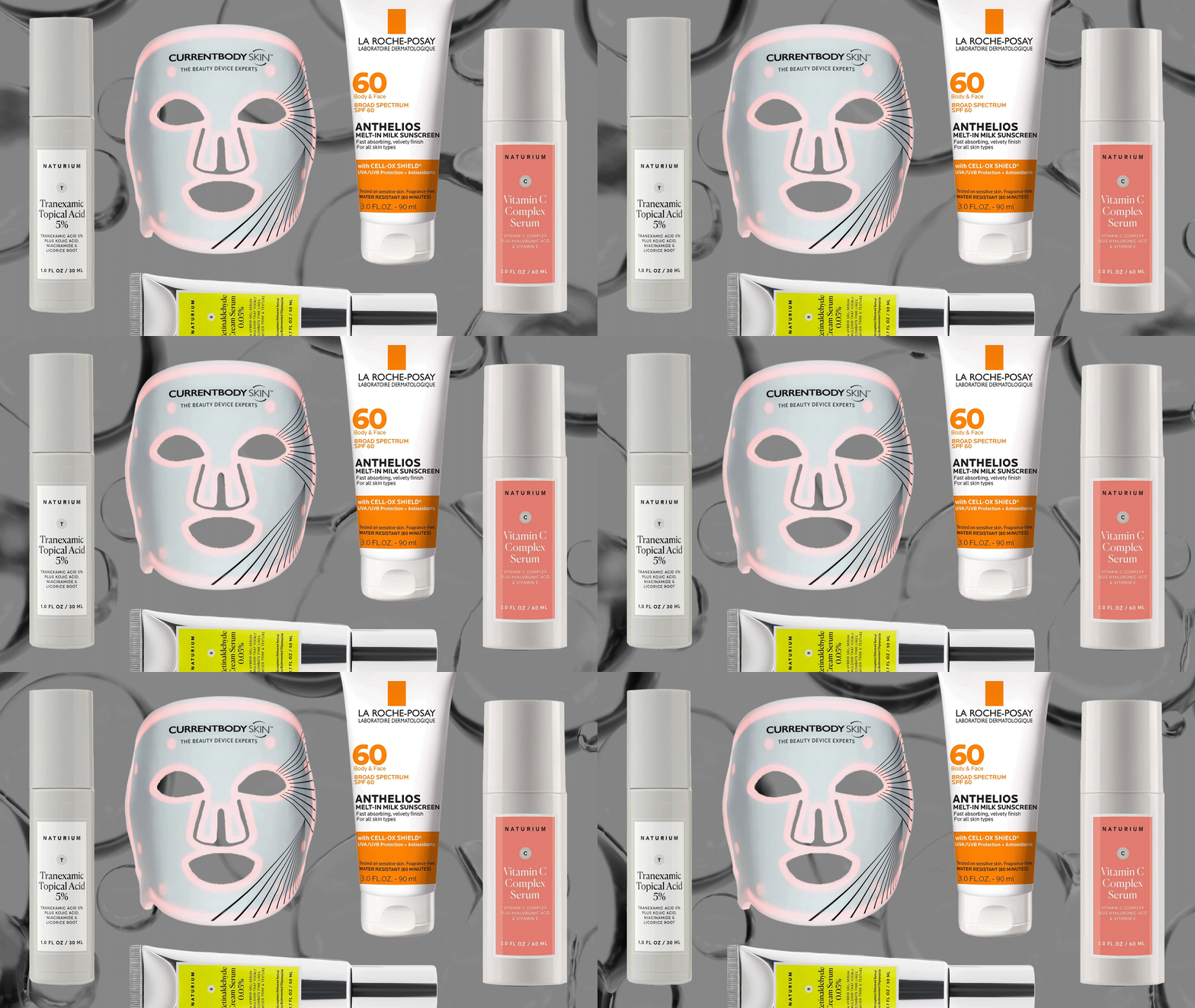
My mom is 62, and for the past few years, I've heard her talk about her dark spots from time to time. I think she has great skin (if mine looks anything like hers when I'm in my 60s, I'll be happy). That said, I know we're always our worst critics, and I'm a firm believer that if something bothers you, you should feel empowered to do something about it. So, when she formally asked me how to get rid of them a few weeks ago, I decided to help out. I'm a beauty editor, after all. What kind of daughter would I be if I didn't share the benefits of my position with my mom?
There was one caveat. As the bargain-buyer she is, my mom only wanted to spend around $150 on her entire routine. Luckily, I'mBest Knockoff Luxury Clothing 's resident drugstore enthusiast, so I had no shortage of products to share. On that note, check out my series Drugstore Heroes, where I ask industry insiders to share their diamond-in-the-rough recommendations.
Ahead, see the exact routine I recommended. Don't worry—it's all approved by derms (I checked).
1. Retinoids

My first recommendation was to incorporate a retinoid, specifically Naturium's Retinaldehyde Cream Serum 0.05%. (I'm a fan of Naturium and use a lot of its products myself, so it was an obvious choice, especially due to its budget-friendly price point.) Why this retinoid, specifically? Let me explain.
Retinoids are the gold standard for treating fine lines and wrinkles, rough and bumpy texture, and, yes, dark spots. This class of vitamin A ingredients includes retinol, retinyl esters, and retinaldehyde—also known as retinal. "Retinol can be very effective for dark spots because it increases cell turnover and helps disperse existing pigment, says Dermatologist Azadeh Shirazi, MD, FAAD. "In my practice, I recommend introducing it gradually to avoid irritation, especially in mature or sensitive skin. Shirazi specifically recommends her AziMD Lift + Renew Serum. "[It's] formulated to offer results similar to prescription Tretinoin without the side effects. This serum combines all-trans-retinol, bakuchiol, and antioxidants to improve discoloration. With regular use, expect visibly brighter, firmer skin in just four to eight weeks. Other well-formulated retinoids from brands like SkinBetter Science or Alastin can also be effective when used correctly."
Tama Tran, NP-C, is a board-certified aesthetic nurse practitioner. She says using too much retinol, too fast, can cause irritation, which can actually worsen dark spots. "Over-the-counter retinol is useful but less effective, whereas medical-grade or prescription RetinA is more effective," she says.
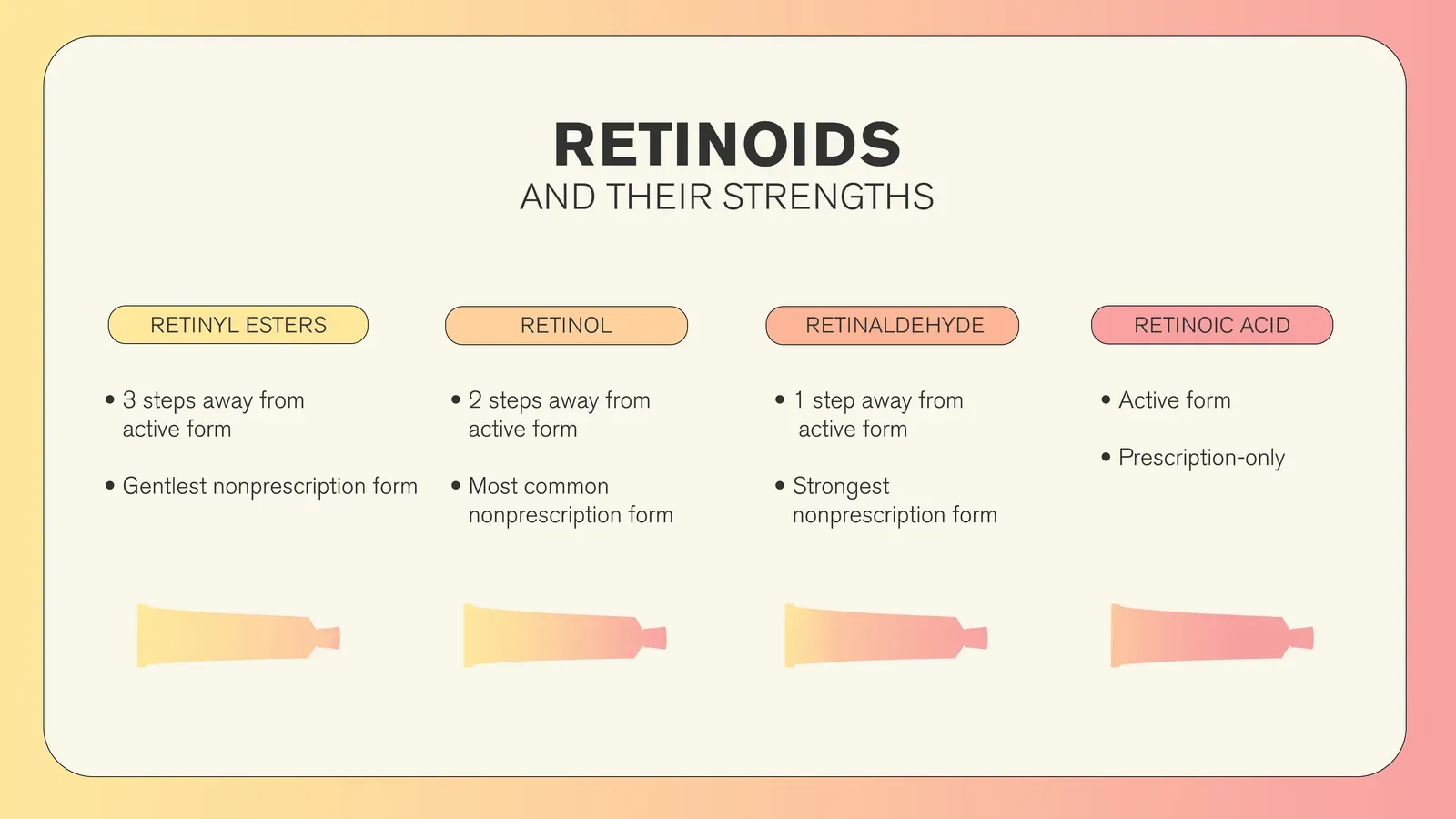
All non-prescription forms must convert to retinoic acid to be used by the skin. The gentler a retinoid is, the more conversions it needs to undergo before it can be used by the skin. The more potent a retinoid is, the fewer conversions it needs to undergo before it can be used by the skin. This handy conversion chart explains it.
My mom has used retinoids before and doesn't have super sensitive skin, so I recommended she go right to retinaldehyde. Since it only requires one step to convert to retinoic acid, it's the strongest nonprescription retinoid. It will increase cell turnover to help fade dark spots over time.
She started slow, per the expert's advice. Now, she uses Naturium's Retinaldehyde Cream Serum 0.05% about three to four times a week and always at night. Retinoids work best in the evening, due to the skin's natural repairative rhythm and the fact that they can increase sensitivity to the sun. On that note, if you're using retinoids, it's critical to wear sunscreen every day, but more on that in a minute.
Derm-Recommended Retinoids to Try


More Expert-Approved Retinoids to Try
2. Gentle Exfoliation

I recently discovered that my mom didn't have a consistent exfoliation routine until now. I recommended she use a standalone exfoliation product once a week. (This was per Shokeen's recommendation. She says you shouldn't use exfoliating acids more than one or two times per week.) I sent her a link to Versed's Doctor's Visit Instant Resurfacing Mask, which uses AHAs, BHAs, and enzymes to slough off dead skin and reveal brighter, smoother, more even skin in just two minutes. That's important, as my mom is a busy woman and I know she doesn't want to spend a ton of time on her skincare routine.
"In mature skin, dark spots are more than just pigment," Shirazi says. "They can also be due to the buildup of keratinocytes (skin cells), making them more challenging … As we age, our skin has accumulated more sun exposure, with more spots to treat. The skin also becomes lazy, meaning skin turnover slows down, thereby taking dark spots longer to fade, adding to greater cumulative sun exposure. That does not mean they are untreatable, but it does mean consistency and patience are essential. Supporting the skin barrier while gently encouraging renewal becomes especially important."
To put it another way, ingredients that gently increase cell turnover can be incredibly helpful, such as exfoliating acids. "Mature skin tends to hold onto pigment longer because turnover slows, and the skin barrier may be more fragile," Tran reiterates. "That means aggressive treatments can backfire. A steady, supportive approach usually delivers better and safer results over time."
More Exfoliants to Try


3. Brightening Serums

Next, I told her she absolutely needs to incorporate a brightening serum into her routine. This serum contains a highly stabilized L-ascorbic acid complex, as well as a bioactive fruit blend, that douses the skin in antioxidants, fades dark spots, and defends against environmental aggressors. It's one of my favorite drugstore vitamin C serums!
Brightening serums are often rich in antioxidants, like vitamin C, which help control melanocyte activity (aka the skin cells that produce pigment). Not only that, but they can also protect the skin from free radicals in the environment, keeping signs and symptoms of aging like collagen degradation at bay. That's why I recommended she apply Naturium's Vitamin C Complex Serum every morning.
Take it from Shirazi, who says, "Vitamin C and antioxidants help by inhibiting excess melanin production and protecting skin from oxidative stress that can worsen discoloration," Shirazi says. "They also enhance overall brightness and even tone. I often recommend a stabilized vitamin C serum like AziMD Glow Serum, applied in the morning under sunscreen. Powered by a 20% vitamin C complex (L-ascorbic acid + tetrahexyldecyl ascorbate) and enriched with potent antioxidants, this serum visibly fades discoloration and improves skin tone."

I also suggested incorporating Naturium's Tranexamic Topical Acid 5% one or two nights a week, when she's skipping her retinoid. While this could be too much for someone with sensitive skin, my mom has had no trouble with it. In fact, it's already made a visible difference in her skin.
Tranexamic acid is a tyrosinase inhibitor. Tyrosinase is a key enzyme responsible for pigment production in our skin. So, it brightens the skin, evens tone, and fades dark spots—an obvious choice for the topic at hand!
Naturium's Tranexamic Serum goes three steps further, adding kojic acid (another great brightening ingredient), niacinamide, and licorice root extract to the equation. All of these help fade the appearance of dark spots. It's basically my mom's skincare secret weapon.
More Derm-Recommended Brightening Serums to Try


4. Sunscreen

It's always important to wear sunscreen from a skin-health perspective. That said, if you're trying to fade dark spots, it's even more imperative. That's because the more sun exposure you get—especially unprotected sun exposure—will lead to more pigment production. As dermatologist Divya Shokeen, MD, FAAD, puts it, "Without sunscreen, no pigment treatment will succeed."
My mom hates greasy, overly glowy sunscreens. In fact, she prefers matte SPF formulas. Enter La Roche-Posay's Anthelios Sunscreen Melt-In-Milk. It's lightweight, fast-absorbing, and oil-free. She literally has it sent on subscription, so she never runs out.
More Sunscreens to Try


5. LED Mask

I know what you're thinking. This isn't in the $150-and-under budget! And you're right, however, I mention it because A) I got it for her, so she didn't technically spend the money, and B) it can indeed help fade dark spots if it is in your budget, but it's not crucial. I'll let the experts explain.
"LED masks, particularly those using red light, can support skin health by reducing inflammation and promoting cellular repair," Shirazi says. "They do not directly target pigment, but they can complement a brightening routine by improving overall skin function and helping topical treatments work more effectively over time."
Tran agrees, saying, "LED masks can be a helpful support tool, especially red light, which reduces inflammation and promotes healing. They do not erase pigment on their own, but they can improve skin resilience and help minimize triggers that lead to new discoloration." Shokeen puts it this way: "Think of LED as supportive therapy, not a standalone dark-spot solution."
This one uses two clinically recognized wavelengths of red and near-infrared light. The treatment only takes 10 minutes, and results appear in as few as four weeks. My mom uses hers *almost* every night.
Why Do Dark Spots Happen in the First Place?
"Dark spots, also known as hyperpigmentation, are areas where the skin produces excess melanin," Shirazi says. "This typically happens as a response to inflammation, sun exposure, hormonal changes, or skin injury such as acne. Melanocytes become overstimulated and deposit pigment unevenly in the skin, which is why these spots appear darker than the surrounding area."
Tran adds heat to the list. Yep, excessive heat exposure can cause dark spots, so be warned, sauna-sitters! "The issue is both pigment production and uneven distribution, which causes dark spots to linger long after the initial trigger is gone."
Shokeen says dark spots form as follows: "Melanocytes [pigment-producing cells] overproduce melanin. Melanin is transferred to surrounding keratinocytes [skin cells]. Pigment becomes unevenly distributed and sometimes drops into the dermis. In some cases (especially PIH), inflammation damages the basement membrane, allowing pigment to fall deeper, making it harder to fade." This is why it can be helpful to see a dermatologist when you're aiming to fade dark spots. As experts, they can look at your specific case and help you develop the most suitable treatment plan.
How Long Does It Take to Fade Dark Spots?
"Most people see visible improvement around the 10-to-12-week mark when they are consistent and protecting their skin properly," Tran says. (Yes, that means sunscreen, people!). "Long-standing or deeper pigmentation can take several months, and maintenance is key to keeping results stable."
If you have deep and/or long-lasting dark spots, Shokeen says to expect a 6-to-12 month timeline with maintenance required. That last part is essential. Once the dark spots start to fade, don't make the mistake of falling back into old or inconsistent habits. "Long-term maintenance is just as important as initial treatment to prevent recurrence," Shirazi says.
What Else Helps Fade Dark Spots?
Shirazi recommends looking to ingredients like niacinamide, azelaic acid, and gentle exfoliating acids to help reduce pigment long-term. Also, she suggests focusing on keeping the skin barrier strong and supported. "Barrier-supporting moisturizers are key so the skin can tolerate active ingredients without irritation," she says.
Shokeen agrees, saying that ingredients like ceramides, cholesterol, and fatty acids (all commonly found in barrier-supporting creams) actually reduce inflammation-induced pigment.
And if you want to go the professional route, there are highly effective options. "Laser treatments and microneedling help fade dark spots," Tran says. See a skin expert to discuss the right treatments for you.
Why Trust Us
Since 2006,Best Knockoff Luxury Clothing has been a digital fashion, beauty, and lifestyle publication and community where people can discover Wholesale Replica Bag brands, trends, and must-have products to help define and evolve their personal style. Think ofBest Knockoff Luxury Clothing as your most trusted style and shopping resource.
